It is hard to fit everything students need to learn and do in to one day. Students get bored sitting at a desk all day listening to lecture after lecture. Why not change it up!?! One thing we will be trying out this year is a flipped classroom.
What is a flipped classroom?
A flipped classroom takes the standard idea of having a “one-size fits all” lecture at school with homework being done at home and flips it. Students can watch videos of lectures at home, then work with their teacher and peers in the classroom to complete “homework” allowing them a better understanding of the concepts being taught.
A flipped classroom takes the standard idea of having a “one-size fits all” lecture at school with homework being done at home and flips it. Students can watch videos of lectures at home, then work with their teacher and peers in the classroom to complete “homework” allowing them a better understanding of the concepts being taught.
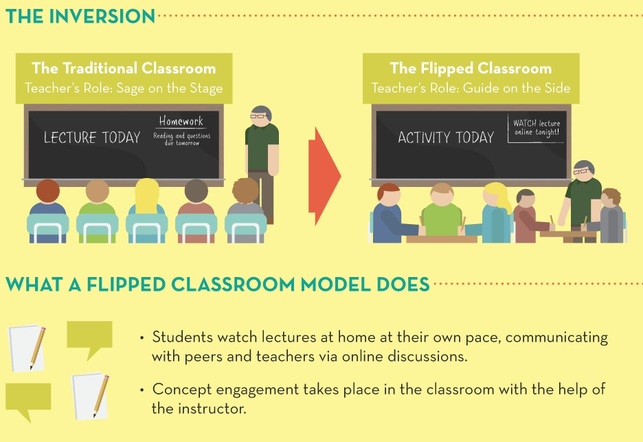
I know it sounds like a crazy idea, but please be patient with us. I feel the students, and parents, will benefit from less or NO homework. A flipped classroom also gives me a way to spend quality time with each student focusing on the help they really NEED.
Something else I would like for you to learn about is collaborative learning. The students will be working in a more hands on environment where they get to become fully emerged in the learning experience. Please take a look at the information below.
Something else I would like for you to learn about is collaborative learning. The students will be working in a more hands on environment where they get to become fully emerged in the learning experience. Please take a look at the information below.
What is Collaborative learning?
It is a method of teaching and learning in which students work together to explore a specific question or to create a meaningful project. Students are working together on shared assignments in the classroom or even with classrooms across the globe via the Internet. Collaborative learning allows students to take control of their learning. Students must learn to work as a team. For a systematic approach to complete the work, they need to have qualities such as team-spirit, problem solving ability, communication skills, and conflict resolution. Students are able to share their strengths and develop their weaker skills. When cooperative groups are guided by clear objectives, students engage in numerous activities that improve their understanding of subjects explored.
It is a method of teaching and learning in which students work together to explore a specific question or to create a meaningful project. Students are working together on shared assignments in the classroom or even with classrooms across the globe via the Internet. Collaborative learning allows students to take control of their learning. Students must learn to work as a team. For a systematic approach to complete the work, they need to have qualities such as team-spirit, problem solving ability, communication skills, and conflict resolution. Students are able to share their strengths and develop their weaker skills. When cooperative groups are guided by clear objectives, students engage in numerous activities that improve their understanding of subjects explored.
